Curses: The Dingbats Font That Brings Personality to Your Designs
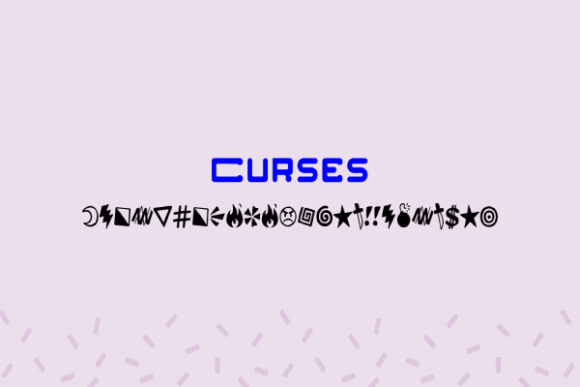
When you think of typography, you probably imagine elegant serifs, clean sans serifs, or expressive scripts. But what about a font that’s purely about fun? Curses, created by designer Vic Fieger, is a unique dingbats font that swaps letters for a collection of hand-drawn doodles, quirky icons, and playful symbols. It’s not meant to replace your body copy; it’s here to add a layer of personality, humor, and visual interest that standard typefaces simply can’t provide.
This isn't your typical premium font package filled with multiple weights and stylistic alternates. Curses embraces a simpler, more direct approach: give creators a toolkit of charming, slightly off-kilter illustrations to sprinkle throughout their projects. Think of it as a secret weapon for injecting character into designs that might otherwise feel sterile or overly corporate. Its appeal lies in its honesty—these are clearly hand-drawn marks, full of imperfections that give them warmth and approachability.
Where Does a Font Like Curses Shine?
The real magic of Curses is in its versatility as a decorative element. It’s a creative font that excels in applications where you want to break the visual monotony and create a memorable impression. For entrepreneurs and small business owners, it can be a game-changer in branding. Imagine using a curated icon from Curses as a secondary logo mark, a fun favicon, or a recurring graphic element on packaging. It instantly makes a brand feel more human and less like a faceless entity.
For content creators and bloggers, Curses is a fantastic asset. Use the icons as custom bullet points in a list, as dividers between sections, or as playful accents in social media graphics. A well-placed doodle can make an Instagram story or a Pinterest pin stand out in a crowded feed. In editorial design, it can add visual wit to magazine layouts, newsletter headers, or book interiors, especially in genres that lean toward the personal, humorous, or indie.
Even in more commercial projects, a touch from a font like Curses can be strategic. For a craft brewery, a set of hand-drawn icons could illustrate the brewing process on a website. For a children's brand, the doodles can create a friendly, engaging atmosphere. The key is context. Curses works best when its casual, handcrafted vibe aligns with the project's overall tone. It’s a display font in the truest sense—meant for headlines, accents, and spot illustrations, not for paragraphs of text.
Practical Guidance for Using Curses Effectively
Adopting a specialty font like Curses requires a slightly different approach than choosing a workhorse serif font or sans serif font. First, evaluate the project fit. Is the brand or publication aiming for a playful, artisanal, or slightly retro feel? If so, Curses could be a perfect match. If the project demands utmost formality, technical precision, or sleek minimalism, it might not be the right tool.
Next, explore the full character map. Download the font and open a glyph viewer in your design software. Don’t just look at the first few icons. Scroll through all the available doodles to understand the full range of the typeface. You might discover a perfect symbol for a specific need—like a tiny rocket for a startup blog or a vintage key for an antique shop logo. This step is crucial for leveraging the font’s full potential beyond the obvious choices.
Font pairing is where design skills come into play. Curses should never compete with your primary text. Pair it with a clean, highly legible serif font or sans serif font for body copy. A strong, simple geometric sans serif can provide a modern contrast, while a classic serif can add a touch of elegance. The goal is to let the Curses icons pop without causing visual chaos. Use them sparingly—one or two well-placed icons per layout often have more impact than scattering them everywhere.
Finally, consider the practicalities. Verify the licensing for your intended use, especially for commercial projects like logo design, packaging, or merchandise. Most premium fonts, including well-crafted dingbats, come with clear licensing terms. Read them. Also, test for readability in context. An icon that looks charming at 72 points might become an unreadable blob at 12 points in a sidebar. Always preview at the intended size and on different screens if it’s for web design.
More Than Just Doodles: Building a Cohesive Brand Identity
Think of Curses not as a single font but as a set of design assets. The consistent hand-drawn style across all its icons is its greatest strength for brand identity. By selecting a subset of these icons and using them consistently across all touchpoints—from your website and social media graphics to your business cards and packaging design—you create a subtle but powerful visual language. This consistency builds recognition and reinforces the brand's personality without saying a word.
For example, a coffee shop could use a specific cup icon from Curses on its menu, a bean icon on its loyalty cards, and a steam icon on its Instagram posts. This repetition ties the customer experience together in a way that feels intentional and crafted. It’s a practical application of modern typography principles, where every visual element contributes to a cohesive whole.
Curses reminds us that typography isn’t just about communication; it’s about connection. In a digital world saturated with perfect vectors and flawless gradients, the human touch of a hand-drawn icon can be surprisingly effective. It invites a smile, creates a moment of delight, and makes a design feel more approachable. For designers, marketers, and creators looking to add that irreplaceable human element, exploring a font like Curses is a worthwhile and fun exercise in creative problem-solving.