Honey Baby: The Modern Script for Playful Branding
There's a specific kind of project that demands more than just a standard font. It needs a voice—one that feels personal, energetic, and unmistakably human. This is where Kong Font Studio's Honey Baby steps in. It’s not just another script font; it’s a modern, handwritten typeface that captures a sense of playful spontaneity. If you’re a designer, crafter, or entrepreneur looking to inject some warmth and personality into your work, understanding how to use a creative font like this is essential.
More Than Just a Pretty Face: The Visual DNA of Honey Baby
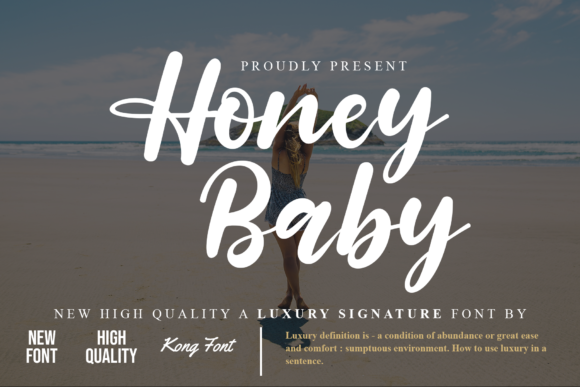
At first glance, Honey Baby feels familiar yet fresh. It’s a script font that leans into a modern, slightly bouncy baseline, giving it an authentic, hand-lettered feel without sacrificing legibility. The strokes have a natural, confident flow, with just enough variation to mimic a real pen or brush. It avoids the overly formal calligraphic look of some display fonts, instead embracing a casual, friendly aesthetic. This makes it incredibly versatile. It’s not trying to be a high-fashion serif font or a minimalist sans serif font; it knows its role is to add a human touch.
The personality of Honey Baby is approachable and creative. It speaks to projects that value connection over corporate formality. Think of it as the font equivalent of a warm smile or a handwritten note on a gift tag. Its character lies in its imperfections—the slight irregularities that make digital text feel genuinely crafted. This quality is what makes it a powerful tool for brand identity, especially for brands that want to appear authentic and relatable.
Where Honey Baby Truly Shines: From Screen to Print
The real test of any premium font is its application. Honey Baby excels in contexts where personality and clarity need to coexist. It’s a fantastic choice for logo design for small businesses, boutiques, bakeries, or personal blogs. The font can form the core of a visual identity, setting a tone that is welcoming and creative. Paired with a simple, clean sans serif font for body text, it creates a beautiful font pairing that balances flair with function.
Beyond logos, its strengths extend into various design assets:
- Marketing & Social Media Graphics: It grabs attention in Instagram posts, Facebook ads, and promotional banners. Its legibility at various sizes makes it suitable for calls-to-action or key quotes.
- Packaging & Editorial Design: On product labels, especially for artisanal goods, or as accent text in magazine layouts, it adds a tactile, premium feel.
- Digital & Web Design: Use it for website headers, hero text, or section titles to guide the visitor's eye and inject brand personality directly into the user experience.
- Crafting & Personal Projects: Its compatibility with tools like Silhouette Design Studio makes it a go-to for DIY enthusiasts creating custom apparel, decals, and home décor.
Crucially, Honey Baby is a commercial font, meaning it’s built for professional use. This is a significant consideration for entrepreneurs and businesses who need reliable, legally sound assets for their commercial ventures.
Making It Work: Practical Guidance for Using This Typeface
Choosing the right font is only half the battle; using it effectively is what elevates your design. Here’s how to integrate Honey Baby into your workflow with confidence.
Evaluating Fit and Readability
First, consider the context. Is the text meant to be read in long paragraphs? If so, Honey Baby is best reserved for headlines or short phrases. Its handwritten style, while legible, can cause eye strain in large blocks. For body copy, pair it with a highly readable serif font or sans serif font. Always test your designs at the intended viewing size—what looks charming on a large poster might become illegible as a small website button.
Mastering Font Pairing and Hierarchy
The key to professional design is visual hierarchy. Use Honey Baby for your primary headline to set the mood. Then, choose a secondary typeface for subheadings and a third for body text. A common and effective approach is to pair this handwritten font with a geometric sans serif. The contrast between the organic script and the structured geometric forms creates visual interest and ensures clarity. Avoid pairing it with another highly decorative font, as this can create visual chaos.
Leveraging Its Features
While this article focuses on its core appeal, always check the font package for additional styles or glyphs. Many modern typefaces include alternates, ligatures, or swashes that can add even more custom flair to your lettering. Experiment with these in Photoshop or your design software to create truly unique compositions.
Ultimately, Honey Baby is more than just a design asset; it's a tool for storytelling. By understanding its strengths—its modern playfulness, its human touch, and its versatile applications—you can make informed decisions that enhance your projects, engage your audience, and build a more memorable and cohesive brand presence. It’s a reminder that in the world of modern typography, sometimes the most effective choice is the one that feels the most personal.