Good Idea: A Playful Script Font for Modern Brands
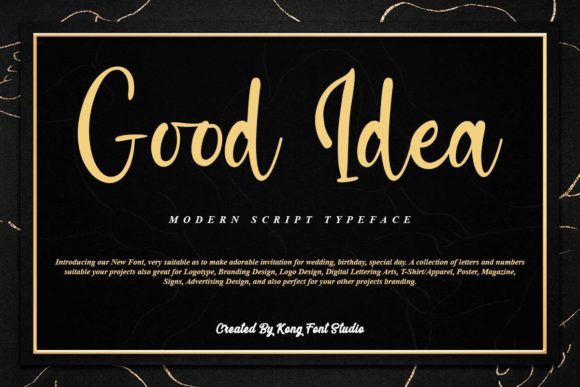
When you’re building a brand or designing a piece of marketing, the typeface you choose does more than just display words—it sets the entire tone. It can whisper elegance, shout excitement, or share a friendly secret. For those looking to inject a dose of personality and approachability into their work, a creative font like Good Idea offers a compelling solution. This modern, handwritten script font from Kong Font Studio strikes a balance between casual charm and professional clarity, making it a versatile asset in any designer's toolkit.
More Than Just Handwriting: Understanding the Font's Character
At first glance, Good Idea feels familiar and inviting. It’s not a rigid, formal calligraphy font, nor is it a messy, unrefined scrawl. Instead, it sits in a sweet spot—a clean, playful script that mimics natural, confident handwriting. The letterforms have a gentle flow, with smooth connections and a slight bounce that gives the text a sense of movement and energy. This isn't a font that tries to be overly quirky or decorative; its strength lies in its legibility and warmth. The consistent baseline and open counters ensure that words remain clear even at smaller sizes, a critical factor for any project from packaging design to social media graphics.
The personality of Good Idea is decidedly modern and optimistic. It avoids the vintage or rustic connotations of some script fonts, making it feel fresh and current. This makes it an excellent choice for brands that want to appear innovative, friendly, and relatable. Think of a local coffee shop's menu, a wellness blogger's logo, or the branding for a new mobile app—Good Idea can help convey a message that is both professional and personable.
Where This Script Font Truly Shines: Practical Applications
The true test of a premium font is its versatility. Good Idea is designed as a display font, meaning it's crafted to be used in headlines, logos, and other prominent places where its character can be fully appreciated. Its strengths become particularly evident in specific contexts.
For logo design, especially for small businesses, startups, and creative entrepreneurs, this typeface is a fantastic starting point. It can instantly give a brand identity a sense of approachability and creativity. A bakery, a boutique clothing line, or a freelance photographer could use Good Idea as their primary wordmark, or pair it with a clean sans serif font for a balanced look. The key is to let the font's natural charm do the work without overcomplicating the design.
In the realm of packaging design and product labels, this script font excels at drawing the eye. Imagine it used for the flavor name on a gourmet jam jar, the title on a handmade candle box, or the call-to-action on a snack package. It communicates care and craftsmanship, which can significantly influence a customer's perception of quality. Similarly, for t-shirt printing and sport designs, Good Idea can create bold, readable graphics that feel energetic and custom-made, perfect for team names, motivational phrases, or brand logos on apparel.
Digital applications are just as strong. As a creative font, it can make social media graphics pop on platforms like Instagram and Pinterest. Use it for quote graphics, promotional announcements, or story overlays to create a cohesive and engaging visual feed. For web design, it's best used sparingly for key elements like a hero section headline or a special offer banner, paired with a highly readable serif font or sans serif font for body copy to maintain accessibility and readability.
Making It Work: Pairing, Licensing, and Best Practices
Choosing a font is just the first step. Using it effectively is what separates good design from great design. Here’s how to integrate Good Idea into your projects with confidence.
Font Pairing is Crucial. A script font like this works best when it has a partner. Pairing it with a neutral, geometric sans serif font (like Montserrat or Lato) creates a clean, modern contrast that is both eye-catching and easy to read. For a more classic, editorial feel, consider a sturdy serif font (like Georgia or Playfair Display). The rule of thumb is to let Good Idea be the star in headlines and logos, while its partner handles the longer, more detailed text.
Consider Readability and Hierarchy. Because it’s a handwritten font, avoid using Good Idea for long paragraphs or small body text. Its strength is in short bursts of impactful text. Use it to establish a visual hierarchy: a bold, expressive headline in Good Idea, followed by a subheading in a medium-weight sans serif, and body text in a regular weight of the same sans serif. This creates a clear path for the reader's eye.
Evaluate the Project Fit. Ask yourself: does the tone of my project match the font's personality? Good Idea is perfect for projects that aim to be friendly, creative, youthful, or handmade. It might be less suitable for very formal, corporate, or luxury contexts where a more traditional typeface would convey the required authority and elegance.
Review the Commercial License. Always understand the terms of use for any commercial font. Good Idea is available on platforms like Creative Fabrica, and its license will dictate how you can use it in client work, on products for sale, and in digital assets. Ensuring proper licensing protects you legally and respects the work of the font creators at Kong Font Studio.
Ultimately, a great design asset like Good Idea is a tool for communication. By understanding its strengths—its modern script style, its readability in display contexts, and its ability to foster a friendly brand perception—you can make a more informed choice. Test it out, experiment with pairings, and see if its character aligns with the story you want to tell. In the crowded landscape of modern typography, finding a typeface that feels both authentic and effective is, indeed, a very good idea.